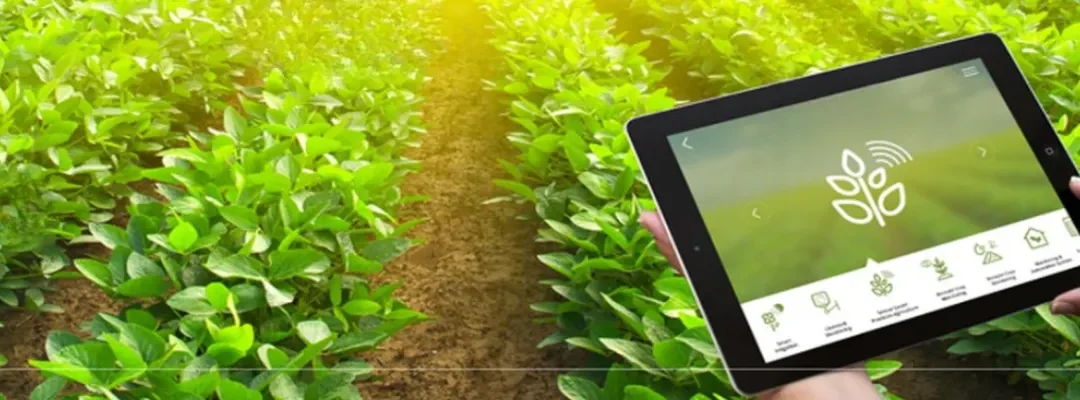
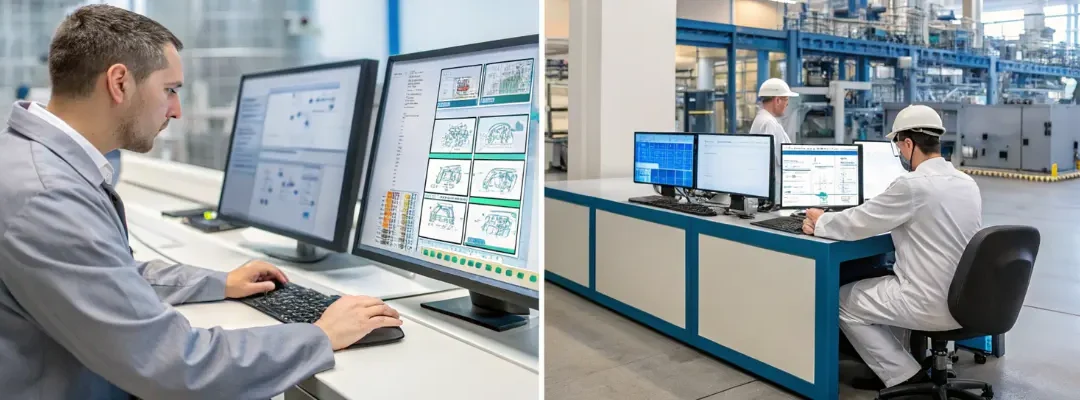
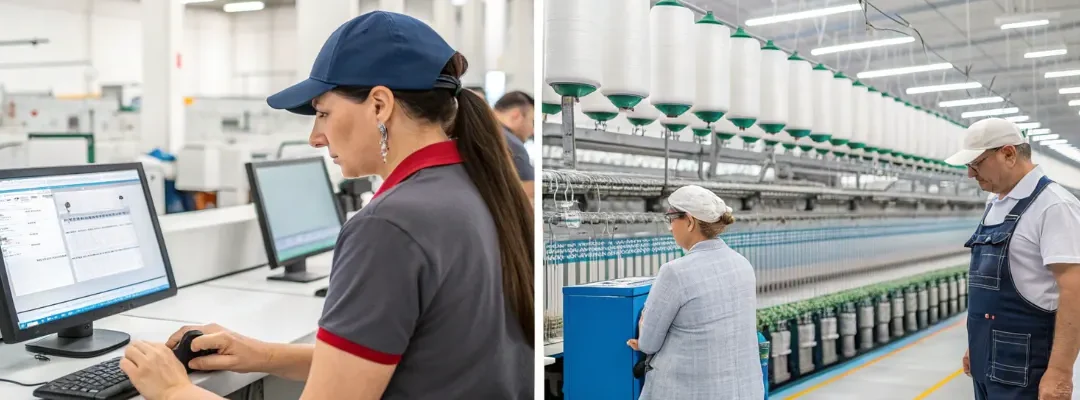
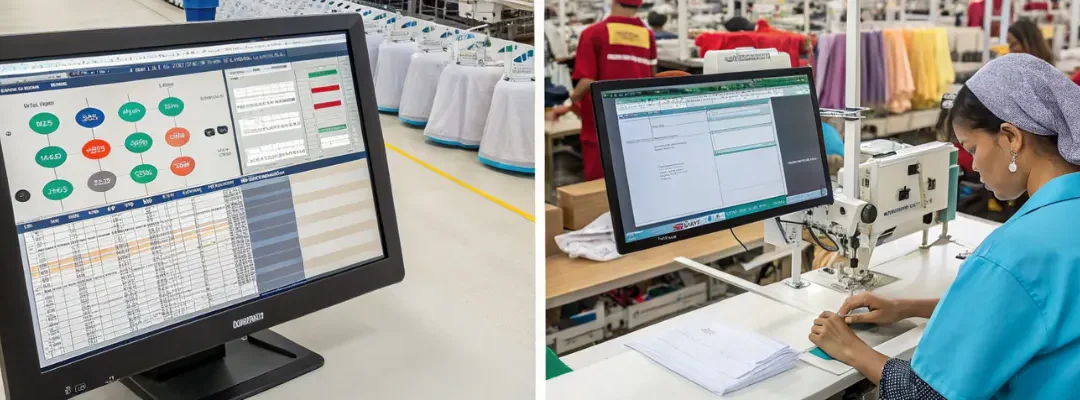
Agriculture and food processing operate within one of the most quality-sensitive and regulation-intensive supply chains in the world. From farm inputs and raw produce procurement to processing, packaging, cold storage, and distribution, every stage impacts food safety, shelf life, compliance, and brand trust.
Food businesses must manage:
Variability in agricultural raw materials
Perishability & expiry control
Hygienic processing environments
Cold chain logistics
Strict regulations (FSSAI, HACCP, ISO 22000)
Batch & lot traceability
Quality & lab testing
Packaging & labeling accuracy
Multi-stage processing workflows
Farmer/vendor relationships
Seasonal demand & production cycles
Manual systems and spreadsheets cannot handle this complexity. A dedicated Agriculture & Food Processing ERP integrates farm procurement, production, QC, compliance, cold storage, packaging, and distribution into a single, controlled digital platform.
Why Agriculture & Food Processing Companies Need ERP
Common challenges across food and agro-processing industries:
No farm-level traceability
Quality inconsistency due to raw material variability
High spoilage & expiry losses
Manual QC increases food safety risks
FIFO/FEFO not followed correctly
Difficult FSSAI & HACCP audits
Cold storage failures
Poor visibility into processing losses
Inaccurate batch costing
Delayed shipments & recalls
A specialized ERP brings control, compliance, and confidence across the entire farm-to-fork lifecycle.
Key Features of Agriculture & Food Processing ERP (2026 Edition)
1. Farm-to-Fork Traceability
ERP tracks every step:
Farmer & farm details
Raw produce batch & lot creation
Processing stages
Packaging batch
Dispatch & customer mapping
Critical for recalls, certifications, and exports.
2. Raw Material Procurement, Grading & Weighment
ERP manages:
Farmer procurement & vendor contracts
Weighment integration
Moisture testing
Size, color & quality grading
Sorting & washing records
Automated farmer/vendor payments
Improves raw material quality & supplier transparency.
3. Recipe, Formulation & Processing Control
Supports:
Standard recipes (food, beverages, spices, dairy, RTE)
The oil, gas, and petrochemical industries operate in one of the most capital-intensive, safety-critical, and compliance-driven environments in the world. From upstream to downstream operations, organizations must control hazardous materials, complex process plants, massive assets, and strict regulations—without compromising uptime or profitability.
Whether managing refineries, petrochemical plants, lubricant blending units, gas processing facilities, tank farms, pipelines, or terminals, companies must handle:
Explosive & hazardous materials
Multi-stage refining & chemical processing
Blending & formulation accuracy
Tank farms, pipelines & terminals
Environmental, health & safety (EHS) compliance
Asset-heavy maintenance operations
Laboratory testing & certification
Crew, shift & permit-to-work control
Regulatory audits & reporting
Manual systems cannot manage this complexity. A specialized Oil & Gas / Petrochemical ERP integrates operations, safety, maintenance, supply chain, compliance, and costing into one controlled digital backbone.
Why Oil & Gas & Petrochemical Companies Need ERP
Common operational risks and inefficiencies:
High accident & leak risk
Manual EHS & compliance documentation
No real-time visibility of tank levels or pipelines
Metal fabrication companies operate in a highly customized, engineering-driven environment. Unlike mass production, every job may involve unique drawings, material grades, tolerances, and delivery commitments.
Whether manufacturing sheet-metal parts, structural frames, pressure vessels, industrial enclosures, machine bases, or precision assemblies, fabricators must manage:
Engineering drawings & revisions
Material nesting & cutting optimization
CNC laser / plasma / waterjet cutting
Bending, rolling & forming
Welding & fabrication workflows
Machining & surface finishing
Assembly & project coordination
Consumables & gas usage
Quality inspection & traceability
Job-wise costing & delivery tracking
Manual systems struggle with this complexity. A dedicated Metal Fabrication ERP connects engineering, production, quality, and costing into one controlled, real-time system.
Why Metal Fabricators Need ERP
Common challenges faced on the shop floor:
Frequent drawing revisions not reaching production
High plate & sheet wastage due to poor nesting
Wrong cutting from outdated drawings
No real-time visibility of WIP across stages
Welding quality inconsistencies
No control on welding rods, wire & gas usage
Assembly delays due to missing parts
Inaccurate quotations & job costing
Rework, rejection & delivery delays
A Metal Fabrication ERP replaces manual coordination with system-driven execution.
Key Features of Metal Fabrication ERP (2026 Edition)
1. Engineering Drawing, BOM & Revision Control
ERP manages:
CAD drawing upload (DXF, DWG, STEP, PDF)
Drawing version history & change logs
Engineering change control (ECR/ECO)
Auto BOM generation from drawings
Material grade, thickness & tolerance mapping
Weld symbols, hole patterns & notes
Ensures production always works on the latest approved drawing.
2. Cutting Planning, Nesting & CNC Integration
Supports:
Laser cutting
Plasma cutting
Waterjet cutting
Shearing
ERP features:
Sheet nesting optimization
Material utilization heat maps
CNC machine-wise routing
Program assignment & execution status
Scrap & remnant tracking
Reduces material wastage and improves machine throughput.
3. Bending, Rolling & Forming Workflow
ERP tracks:
Press brake operations
Rolling & forming jobs
Punching & forming cycles
Tool/die selection
Bend angles & tolerances
Prevents dimensional errors and rework.
4. Welding Management (MIG / TIG / ARC / Spot)
ERP handles:
Welding Procedure Specifications (WPS)
Welder qualification & certification
Weld routing & sequence
Consumable usage (rod, wire, flux)
Shielding gas tracking (Argon, CO₂, Mix)
Weld defect logging (porosity, crack, undercut)
Weld maps & inspection records
Improves weld quality, traceability, and audit readiness.
5. Machining & Finishing Operations
Manages:
CNC milling
Turning & drilling
Grinding
Surface finishing
Painting & powder coating
ERP links machining parameters with inspection checkpoints.
6. Assembly & Project Management
Tracks:
Sub-assemblies & final assemblies
Operation routing
Assembly checklists
Missing part alerts
Labour hours per assembly
Project milestones
Ensures on-time completion of fabrication projects.
7. Raw Material Inventory (Plates, Pipes & Profiles)
ERP manages:
MS / SS / Alloy steel plates
Pipes & tubes
Channels, angles & beams
Bars, sheets & coils
Tracks:
Thickness & grade
Heat number
Lot number
Storage location
Enables material traceability and availability planning.
Chemical and process manufacturing industries operate in high-risk, high-precision environments where even small deviations in formulation, temperature, or handling can lead to quality failures, safety incidents, or regulatory violations.
Manufacturers across paints, resins, adhesives, solvents, agrochemicals, dyes, lubricants, specialty chemicals, and intermediates must manage:
Complex formulations
Controlled batch processing
Hazardous raw materials
Strict quality parameters
Regulatory compliance (SDS, GHS, REACH, ISO)
Traceability & recall readiness
Waste, effluent & emission control
Manual systems and spreadsheets cannot handle this complexity reliably. A dedicated Chemical & Process Manufacturing ERP provides controlled formulations, batch-level traceability, safety governance, QC integration, and audit-ready compliance.
Why Chemical & Process Manufacturers Need ERP
Common operational challenges include:
Manual formulation & scaling errors
Batch-to-batch quality variation
Unsafe handling of hazardous materials
No visibility into reaction parameters
QC delays affecting dispatch
Regulatory non-compliance risks
Poor waste & by-product tracking
Inaccurate batch costing
Difficulty meeting customer specifications
Key Features of Chemical ERP (2026 Edition)
1. Recipe & Formulation Management
ERP enables:
Multi-level formulations
Percentage & ratio-based compositions
Density, viscosity & solids-based adjustments
Formula version control
Approval & change control workflow
Restricted access for sensitive recipes
Automatic batch size scaling
Ensures consistent formulation across all batches.
2. Batch Manufacturing & Process Control
ERP manages full batch lifecycle:
Raw material charging
Mixing & blending
Heating / cooling cycles
Reaction time tracking
Catalyst & additive dosing
Filtration & settling
Parameter deviation logging
Reduces batch failures and reprocessing.
3. Chemical Raw Material Inventory Management
Tracks chemical-specific attributes:
CAS number
Hazard class & GHS symbols
Flash point
Shelf life & expiry
Storage conditions
Compatibility rules
Lot & batch numbers
Improves safety and regulatory compliance.
4. Quality Control & Laboratory Integration
QC tests managed digitally:
pH
Viscosity
Density
Purity
Moisture
Shade / color
Stability
Surface tension
Flash point
Results are linked directly to batches with approval/rejection logic.
Faster QC release, fewer dispatch delays.
5. Regulatory Compliance & SDS Management
ERP supports:
SDS / MSDS repository
GHS & hazard labeling
REACH & BIS compliance
ISO 9001 / 14001 documentation
Batch COA generation
Audit trails & electronic approvals
Audit-ready at all times.
6. EHS (Environment, Health & Safety) Module
Covers:
PPE compliance tracking
Safe storage & segregation rules
Fire & explosion risk management
Incident & near-miss reporting
ETP (Effluent Treatment Plant) logs
Emission & waste monitoring
Neutralization & disposal records
Creates a safer, compliant plant environment.
7. Packaging, Drum Filling & Labeling
ERP controls:
Drum, barrel & container filling
Variable pack sizes
UN & hazard labels
Barcode / QR-coded drums
Palletization tracking
Transport safety documents
Prevents dispatch errors and improves traceability.
8. Tank Farm, Silos & Pipeline Management
ERP tracks:
Tank level monitoring
Transfer logs
Pump usage
Mixing vessel allocation
Temperature & pressure readings
Ensures smooth, contamination-free liquid handling.
9. End-to-End Traceability
Complete forward & backward tracking:
Raw material lot → Batch → Packaging → Customer
Essential for recalls, audits, and customer complaints.
Textile mills form the core of the global textile value chain, converting raw fibers into yarns and fabrics that feed garment, home textile, and technical textile industries.
Modern mills must manage:
Raw cotton & fiber procurement
Bale mixing & laydown
Spinning operations (blow room → ring frame → auto coner)
Because textile manufacturing involves continuous processes, high-speed machinery, and chemical-dependent outcomes, manual systems lead to losses, rework, and inconsistent quality. A specialized Textile ERP gives mills real-time visibility, recipe control, efficiency tracking, and full lot traceability—from fiber to finished fabric.
Why Textile Mills Need ERP
Common mill-level challenges include:
No real-time machine efficiency visibility
High cotton, yarn & fabric wastage
Shade variation & dye batch inconsistency
Lot mix-ups during processing
Chemical overconsumption
Poor cross-department planning
Repeated customer rejections
Manual QC & audit documentation
Delayed dispatch & invoicing
A Textile ERP replaces reactive decision-making with process-driven, data-controlled manufacturing.
Key Features of Textile ERP (2026 Edition)
1. Raw Cotton, Fiber & Bale Management
ERP manages:
Cotton bale procurement
Fiber properties (length, micronaire, strength)
Moisture & trash levels
Bale laydown & mixing plans
Lot-wise tracking
Ensures yarn quality consistency from the start.
2. Spinning Production Management
ERP tracks every spinning stage:
Blow room
Carding
Drawing
Combing
Simplex
Ring frame
Auto coner
Monitors:
Spindle efficiency
Breakage rates
Production per shift
Waste generation at each stage
Improves output, reduces waste & downtime.
3. Yarn Packing, Cone Winding & Lot Traceability
ERP controls:
Cone weight & count
Yarn count & twist
Hard waste & soft waste
Lot & batch assignment
Packing & labeling
Full traceability from cotton bale → yarn cone.
4. Weaving & Loom Planning
ERP supports:
Loom allocation
Warp & weft planning
Pick density control
Loom efficiency tracking
Stop motion & downtime analysis
Fabric defect mapping
Suitable for power looms & automatic looms.
5. Knitting Production Control
ERP tracks:
Knitting machine RPM
Loop length
GSM control
Fabric roll creation
Daily production reporting
Ensures GSM & fabric weight consistency.
6. Dyeing & Processing Management
ERP digitizes the dye house:
Dye & chemical recipes
Lab dip creation & approvals
Batch scheduling
Machine load planning
Temperature, time & liquor ratio
Actual vs theoretical chemical consumption
Achieves repeatable shades and lower reprocessing.
Garment and apparel manufacturing is one of the most operationally complex industries. Each order moves through dozens of interconnected stages—often under tight delivery timelines and frequent buyer changes.
Manufacturers must manage:
Style development & sampling
Buyer merchandising & approvals
Fabric & trims procurement
Cutting & marker efficiency
Stitching line balancing
Washing, printing & embroidery
Finishing, packing & metal detection
Quality control (AQL)
Export documentation & shipment planning
When these processes are handled manually or in silos, factories face cost overruns, delays, rejections, and buyer dissatisfaction. A specialized Garment Manufacturing ERP brings speed, visibility, accuracy, and control—from buyer enquiry to final shipment.
Why Garment & Apparel Manufacturers Need ERP
Common industry challenges include:
Delayed sample approvals
Fabric wastage & shrinkage losses
Trims shortages mid-production
Poor coordination between merchandising & production
Low stitching line efficiency
High rework & quality rejection
Inaccurate costing & margin leakage
No real-time production visibility
Missed shipment deadlines
A Garment ERP eliminates guesswork and replaces it with data-driven, buyer-aligned workflows.
Key Features of Garment Manufacturing ERP (2026 Edition)