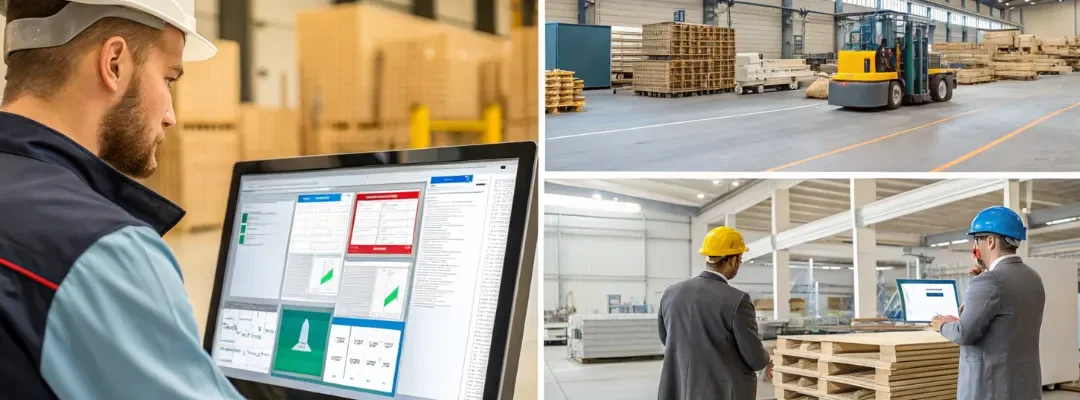
The construction material manufacturing industry forms the backbone of infrastructure and real-estate development. Manufacturers producing cement, steel, pipes, blocks, tiles, aggregates, RMC, and precast materials operate in a high-volume, margin-sensitive, and logistics-intensive environment.
To stay competitive, manufacturers must control:
- Large-scale raw material procurement
- High-volume, batch-based production
- Consistent quality output
- Inventory across yards, silos & depots
- Dealer & distributor networks
- Heavy vehicle dispatch & logistics
- Weighbridge operations
- Costing, compliance & GST
Manual systems struggle to handle this complexity, resulting in wastage, delays, quality variations, dispatch errors, and profit leakage. A specialized Construction Material Manufacturing ERP digitizes and synchronizes operations—from raw material intake to finished goods dispatch—ensuring control, consistency, and scalability.
Why Construction Material Manufacturers Need ERP
Common challenges faced by construction material plants include:
- Variability in raw material quality
- Inconsistent batch output
- High material wastage
- Poor visibility of production & stock
- Dispatch bottlenecks at weighbridges
- Dealer order & pricing confusion
- Manual QC records
- Difficulty managing multi-plant operations
An ERP system brings real-time visibility, automation, and process discipline across plants and supply chains.
Key Features of Construction Material Manufacturing ERP (2026 Edition)
1. Raw Material Procurement & Quality Management
ERP manages bulk raw materials such as:
- Limestone, clinker, gypsum
- Fly ash, sand, aggregates
- Cement additives
- Steel billets & scrap
- Polymers (PVC/HDPE)
Features include:
- Vendor QC & approval
- Moisture, density & grading logs
- Bulk storage (silos, yards, bins)
- Supplier performance tracking
- Ensures uninterrupted, quality-controlled production.
2. Production Planning & Batch / Formula Control
ERP supports industry-specific production methods:
- Cement & clinker batch formulation
- RMC mix design & batch scaling
- Pipe extrusion parameters
- AAC block curing cycles
- Tile pressing & kiln schedules
- Crushing & screening output control
Includes:
- Demand-based production planning
- Batch size optimization
- Line & equipment allocation
- Ensures uniform quality and predictable output.
3. Quality Control (QC) & Lab Integration
ERP digitizes lab & QC operations with parameters such as:
- Compressive strength
- Fineness & density
- Water absorption
- Chemical composition
- Dimensional accuracy
- Curing & setting time
ERP automatically:
- Links QC results to batches
- Approves or rejects production lots
- Stores test certificates
- Creates traceable, audit-ready quality records.
4. Inventory & Warehouse / Yard Management
ERP manages inventory across:
- Raw material yards & silos
- WIP stages
- Finished goods stockyards
- Multiple warehouses & depots
Features include:
- Batch-wise stock tracking
- FIFO / FEFO rules
- Reorder level alerts
- Inter-plant transfers
- Eliminates stock mismatch and over-production.
5. Dealer & Distributor Management
ERP provides structured sales control through:
- Dealer portal for order booking
- Region-wise price lists
- Discount & scheme management
- Credit limit enforcement
- Order-to-dispatch tracking
- Improves dealer satisfaction and sales predictability.
6. Dispatch, Logistics & Transport Management
ERP automates dispatch operations including:
- Order allocation
- Vehicle scheduling
- Loading plans
- Transporter management
- Route planning
- POD (Proof of Delivery) capture
- Ideal for bulk & high-frequency dispatch environments.
7. Weighbridge Integration
ERP integrates directly with weighbridges to capture:
- Tare weight
- Gross weight
- Net weight
- Vehicle number
- Timestamp & operator
Features:
- Automatic DC & invoice linkage
- Fraud prevention
- Faster truck turnaround
- Eliminates manual errors and revenue leakage.
8. Maintenance & Equipment Management
ERP tracks plant & machinery such as:
- Crushers, mixers, kilns
- Conveyors & elevators
- Extruders & presses
- Boilers & generators
- Moulds, pallets & dies
Includes:
- Preventive maintenance schedules
- Breakdown history
- Spare parts inventory
- Reduces downtime and extends asset life.
9. Costing & Profitability Analysis
ERP calculates accurate costs based on:
- Raw material consumption
- Fuel & power usage
- Labour & overheads
- Transportation cost
- Batch-wise production cost
- Enables data-driven pricing and margin control.
10. Compliance & Documentation Management
ERP stores and manages:
- Batch QC reports
- Test certificates
- ISO & statutory documents
- Environmental & safety records
- Keeps plants audit-ready at all times.
End-to-End ERP Workflow for Construction Material Manufacturing
Raw Material Procurement
Vendor → GRN → QC → Storage.
Production Planning
Sales forecast → Batch plan → Line allocation.
Manufacturing
Material feeding → Processing → Batch formation.
Quality Testing
Lab tests → Batch approval / rejection.
Finished Goods Storage
FG moved to stockyard / warehouse.
Dealer Order Processing
Order booking → Pricing → Credit validation.
Dispatch & Weighbridge
Loading → Weight capture → DC & invoice.
Delivery & POD
Driver uploads POD → Billing confirmation.
Accounts & GST
Ledger update → Receivables tracking.
Challenges vs ERP Solutions
| Industry Challenge | ERP Solution |
|---|---|
| Batch quality variation | Formula & QC automation |
| Raw material inconsistency | Supplier QC & moisture tracking |
| High wastage | Accurate batch planning |
| Dispatch delays | Weighbridge & logistics integration |
| Dealer complaints | Dealer portal & live tracking |
| Equipment breakdowns | Preventive maintenance |
| Cost leakage | Batch-wise costing |
Industries Benefiting from Construction Material ERP
- Cement & clinker plants
- TMT & structural steel manufacturers
- PVC / HDPE pipe plants
- AAC blocks & fly ash brick units
- Tile & ceramic factories
- Stone crushers & quarry operations
- RMC plants
- Precast & prefabrication units
Benefits of Construction Material Manufacturing ERP
- Consistent product quality
- Reduced production & wastage cost
- Accurate dispatch & billing
- Improved machine uptime
- Full batch traceability
- Efficient dealer management
- Lower inventory losses
- Faster, data-driven decisions
Why Choose 100xERP for Construction Material Manufacturing?
100xERP is designed for high-volume, plant-based manufacturing and offers:
- Batch & formula management
- QC & lab integration
- Weighbridge integration
- Dealer & distributor portal
- Multi-plant inventory control
- Maintenance & asset management
- Dispatch & logistics automation
- Accounts & GST integration
- Ideal for cement, steel, pipe, block, tile, aggregate & RMC manufacturers.
FAQ – Construction Material Manufacturing ERP
Q1. Can ERP integrate with weighbridges?
Yes — fully automated weight capture and dispatch linkage.
Q2. Is ERP suitable for multi-plant operations?
Yes — centralized control with plant-wise dashboards.
Q3. Does ERP support batch-wise QC?
Yes — physical & chemical QC integration included.
Q4. Can dealers place orders online?
Yes — dealer portal with order tracking & credit control.