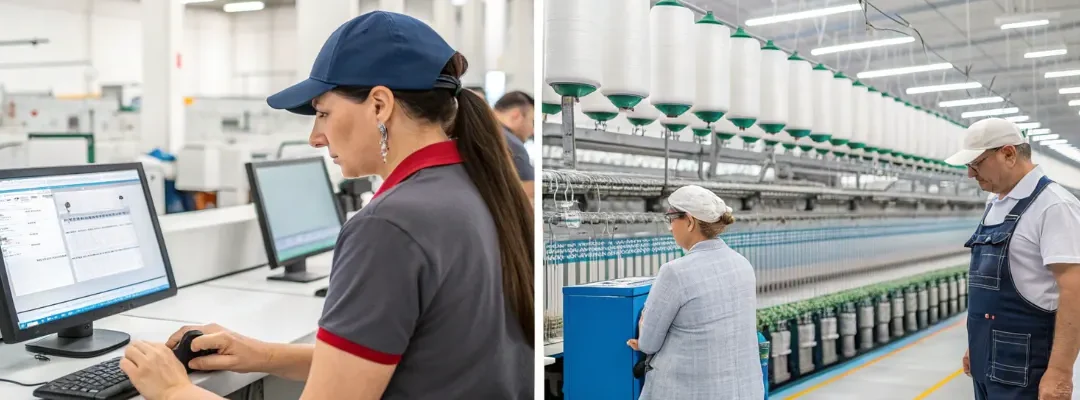
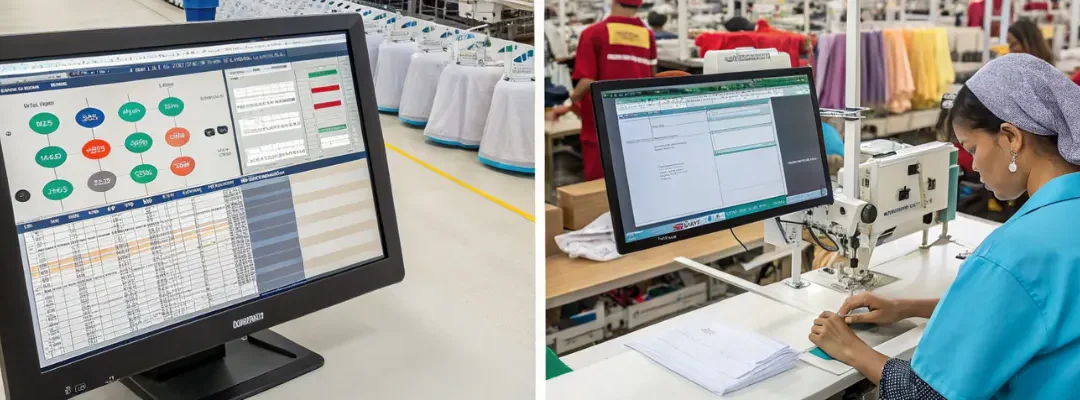
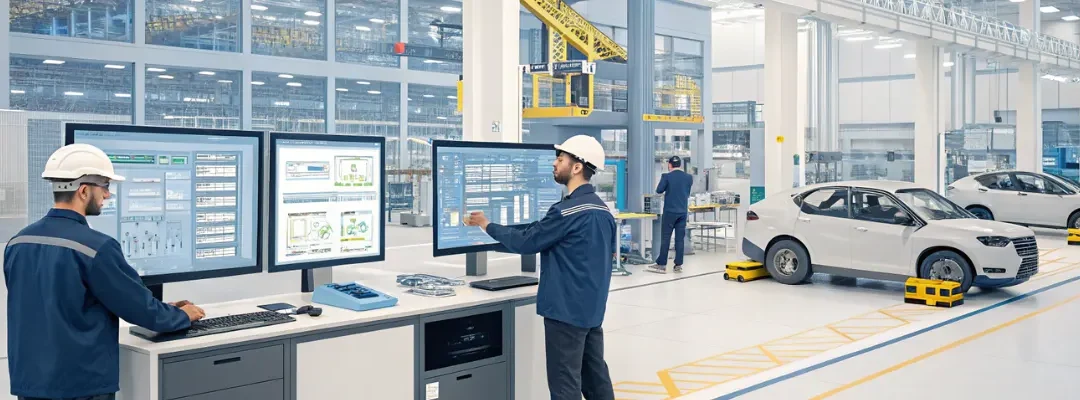
Textile mills form the core of the global textile value chain, converting raw fibers into yarns and fabrics that feed garment, home textile, and technical textile industries.
Modern mills must manage:
Raw cotton & fiber procurement
Bale mixing & laydown
Spinning operations (blow room → ring frame → auto coner)
Because textile manufacturing involves continuous processes, high-speed machinery, and chemical-dependent outcomes, manual systems lead to losses, rework, and inconsistent quality. A specialized Textile ERP gives mills real-time visibility, recipe control, efficiency tracking, and full lot traceability—from fiber to finished fabric.
Why Textile Mills Need ERP
Common mill-level challenges include:
No real-time machine efficiency visibility
High cotton, yarn & fabric wastage
Shade variation & dye batch inconsistency
Lot mix-ups during processing
Chemical overconsumption
Poor cross-department planning
Repeated customer rejections
Manual QC & audit documentation
Delayed dispatch & invoicing
A Textile ERP replaces reactive decision-making with process-driven, data-controlled manufacturing.
Key Features of Textile ERP (2026 Edition)
1. Raw Cotton, Fiber & Bale Management
ERP manages:
Cotton bale procurement
Fiber properties (length, micronaire, strength)
Moisture & trash levels
Bale laydown & mixing plans
Lot-wise tracking
Ensures yarn quality consistency from the start.
2. Spinning Production Management
ERP tracks every spinning stage:
Blow room
Carding
Drawing
Combing
Simplex
Ring frame
Auto coner
Monitors:
Spindle efficiency
Breakage rates
Production per shift
Waste generation at each stage
Improves output, reduces waste & downtime.
3. Yarn Packing, Cone Winding & Lot Traceability
ERP controls:
Cone weight & count
Yarn count & twist
Hard waste & soft waste
Lot & batch assignment
Packing & labeling
Full traceability from cotton bale → yarn cone.
4. Weaving & Loom Planning
ERP supports:
Loom allocation
Warp & weft planning
Pick density control
Loom efficiency tracking
Stop motion & downtime analysis
Fabric defect mapping
Suitable for power looms & automatic looms.
5. Knitting Production Control
ERP tracks:
Knitting machine RPM
Loop length
GSM control
Fabric roll creation
Daily production reporting
Ensures GSM & fabric weight consistency.
6. Dyeing & Processing Management
ERP digitizes the dye house:
Dye & chemical recipes
Lab dip creation & approvals
Batch scheduling
Machine load planning
Temperature, time & liquor ratio
Actual vs theoretical chemical consumption
Achieves repeatable shades and lower reprocessing.
Garment and apparel manufacturing is one of the most operationally complex industries. Each order moves through dozens of interconnected stages—often under tight delivery timelines and frequent buyer changes.
Manufacturers must manage:
Style development & sampling
Buyer merchandising & approvals
Fabric & trims procurement
Cutting & marker efficiency
Stitching line balancing
Washing, printing & embroidery
Finishing, packing & metal detection
Quality control (AQL)
Export documentation & shipment planning
When these processes are handled manually or in silos, factories face cost overruns, delays, rejections, and buyer dissatisfaction. A specialized Garment Manufacturing ERP brings speed, visibility, accuracy, and control—from buyer enquiry to final shipment.
Why Garment & Apparel Manufacturers Need ERP
Common industry challenges include:
Delayed sample approvals
Fabric wastage & shrinkage losses
Trims shortages mid-production
Poor coordination between merchandising & production
Low stitching line efficiency
High rework & quality rejection
Inaccurate costing & margin leakage
No real-time production visibility
Missed shipment deadlines
A Garment ERP eliminates guesswork and replaces it with data-driven, buyer-aligned workflows.
Key Features of Garment Manufacturing ERP (2026 Edition)
Automotive component manufacturers operate in one of the most demanding manufacturing ecosystems. Every part supplied to an OEM or Tier-1 customer must meet:
Tight dimensional tolerances
Material & metallurgical specifications
Zero-defect quality expectations
Full backward & forward traceability
Strict delivery schedules (JIT / Kanban)
Complete compliance with IATF 16949
Production typically involves multi-stage, process-intensive operations, including:
CNC machining
Forging & casting
Heat treatment
Grinding & finishing
Assembly
Chemical & mechanical testing
Tooling, die & gauge management
PPAP, APQP, PFMEA & Control Plans
OEM audits & customer scorecards
Manual systems, spreadsheets, and disconnected software cannot support this complexity. A specialized Automotive ERP ensures process stability, quality consistency, compliance, and traceability—from raw material heat number to finished part dispatch.
Why Automotive Component Manufacturers Need ERP
Common industry challenges include:
High rejection & rework cost
No heat number / lot traceability
Inconsistent CNC program & tool usage
Poor control over heat treatment parameters
Manual inspection records (audit risk)
Delays in PPAP approval
Tool breakage & unplanned downtime
Difficulty meeting JIT & Kanban schedules
Non-compliance with IATF 16949 documentation
An Automotive ERP replaces manual dependency with standardized, audit-ready, system-driven workflows.
Key Features of Automotive ERP (2026 Edition)
1. Engineering BOM, Routing & Process Planning
ERP supports:
Multi-level Engineering BOM (EBOM)
Routing across CNC, forging, casting, grinding, heat treatment
Alternate machines & processes
Operation-wise cycle time & setup time
Auto job card generation
Ensures controlled, repeatable production flow.
2. Raw Material & Heat Number Traceability
ERP manages:
Supplier material certificates (chemical & mechanical)
Heat number / lot number assignment
GRN → production → dispatch traceability
Material usage reconciliation
Mandatory for OEM audits, recalls & warranty claims.
3. CNC Machining Workflow Control
ERP provides:
CNC program version control
Tool number & offset mapping
Tool life monitoring with alerts
Feed & speed reference storage
Machine utilization tracking
Prevents wrong program usage & machining defects.
4. Forging & Casting Production Management
Tracks:
Die / mould identification
Furnace temperature logs
Pouring & cooling parameters
Trimming & shot-blasting output
Yield & rejection tracking
Ensures metallurgical consistency and process repeatability.
5. Heat Treatment Process Control
ERP digitally records:
Hardening, tempering, annealing
Carburizing & nitriding cycles
Furnace temperature & soak time
Quenching medium
Hardness test results
Reduces variation & improves part performance.
6. Quality Inspection & Testing (QA/QC)
ERP covers:
In-process inspection
Final inspection
CMM reports
Hardness & surface roughness
Dimensional checks
Metallurgical testing
Gauge calibration records
All inspection data is audit-ready and traceable.
7. PPAP, APQP, PFMEA & Control Plan Management
ERP generates and stores:
Process flow diagrams
PFMEA & Control Plans
PPAP Level-wise documents
Material certificates
Inspection & capability reports
Speeds up OEM approval & re-approval cycles.
8. Tooling, Die & Gauge Management
ERP tracks:
Tool & die life
Preventive maintenance
Breakdown history
Spare tools inventory
Gauge calibration schedules
Reduces downtime & quality drift.
9. Production Planning, MRP & Machine Loading
ERP enables:
JIT & Kanban scheduling
Capacity & bottleneck planning
Real-time WIP visibility
Machine loading optimization
Schedule adherence tracking
Essential for automotive supply chain performance.
10. Dispatch, JIT & OEM Schedule Integration
ERP supports:
Customer schedule releases
ASN (Advanced Shipping Notice)
VDA / AIAG labels
EDI integration
Packaging & pallet instructions
Seamless integration with OEM logistics systems.
End-to-End Automotive ERP Workflow
Raw Material Procurement Material certificate → GRN → QC → Heat number assignment
Production Planning Routing → Machine allocation → Job card
The packaging industry—especially flexible packaging, laminates, pouches, labels, corrugated cartons, and rigid packaging—operates in a highly complex, roll-to-roll, multi-stage manufacturing environment.
Manufacturers must handle:
Printing (Rotogravure / Flexo)
Lamination & curing
Slitting & rewinding
Pouching / bag making
Die-cutting
Cylinder & plate management
Ink, adhesive & solvent mixing
Roll-level traceability
Quality control & lab testing
Dispatch & logistics
With frequent job changes, customer-specific specifications, high raw-material cost, and tight delivery timelines, manual systems lead to wastage, rejections, traceability gaps, and margin loss. A specialized Packaging ERP brings process control, roll-wise traceability, cost visibility, and real-time production monitoring—from raw film to finished pouch or roll.
Why Packaging Manufacturers Need ERP
Common challenges in packaging plants include:
Difficulty tracking film rolls & batches
Frequent job changes causing downtime
Ink, adhesive & solvent wastage
Poor visibility of production stage-wise status
QC failures due to manual records
Roll width / GSM / micron mismatch
Cylinder & plate mismanagement
Dispatch errors & delayed deliveries
Inaccurate costing & billing
A Packaging ERP replaces manual dependency with system-driven workflows, digital traceability, and real-time controls.
Furniture and woodwork manufacturing is a design-driven, order-centric, and precision-dependent industry. Unlike mass production, manufacturers must handle custom designs, variable dimensions, multiple materials, CNC machining, finishing operations, and on-site installation—all within tight timelines.
Manufacturers must manage:
Custom orders & design approvals
Cutting plans for wood sheets & panels
CNC, edge-banding & drilling operations
Finishing, polishing & upholstery
Hardware & accessories inventory
Multi-stage production routing
Installation team coordination
Project deadlines & quality control
Costing, wastage & margin control
Most furniture manufacturers still rely on spreadsheets, WhatsApp coordination, and manual shop-floor tracking, which leads to material wastage, production delays, inventory gaps, and cost overruns. A specialized Furniture & Woodwork Manufacturing ERP digitizes and connects the entire workflow—from design approval to cutting, CNC, finishing, dispatch, and installation—ensuring precision, visibility, and profitability.
Why Furniture & Woodwork Manufacturers Need ERP
Common challenges in furniture manufacturing include:
High wastage of plywood/MDF boards
Incorrect or outdated cutting plans
CNC programming errors
Poor coordination between sales, design & factory
Missing hardware during assembly
No real-time order or production visibility
Delayed finishing & installation
Inaccurate costing and margin leakage
An ERP system replaces manual dependency with process-driven automation and real-time control.
Key Features of Furniture & Woodwork Manufacturing ERP (2026 Edition)
1. Order Management & Design Approval Workflow
ERP manages the full custom order lifecycle, including:
Customer enquiry & quotation
CAD / PDF drawing uploads
Revision & version control
Customer approval tracking
Design freeze confirmation
Ensures production always follows the latest approved design.
2. Bill of Materials (BOM) for Modular & Custom Furniture
ERP generates project-specific BOMs, covering:
MDF / plywood / particle board sheets
Laminates, veneers & acrylics
Hardware (hinges, sliders, screws, connectors)
Glass, metal & upholstery components
Automatic quantity calculation ensures:
No under-ordering
No excess stock
No missing parts during assembly
3. Cutting Optimization & Panel Nesting
ERP generates optimized cutting layouts for:
MDF / plywood sheets
Laminated boards
Acrylic & composite panels
Benefits include:
15–30% reduction in material wastage
Faster cutting cycles
Standardized panel sizes
Accurate yield planning
Can integrate with CNC nesting and panel optimization software.
4. CNC Machine Integration & Routing
ERP supports CNC-driven operations such as:
Panel nesting
Routing & engraving
Drilling & grooving
Edge preparation
Features include:
CNC job assignment from ERP
Version-controlled programs
Optional G-code integration
Tool & machine routing
Ensures consistent machining quality and zero rework.