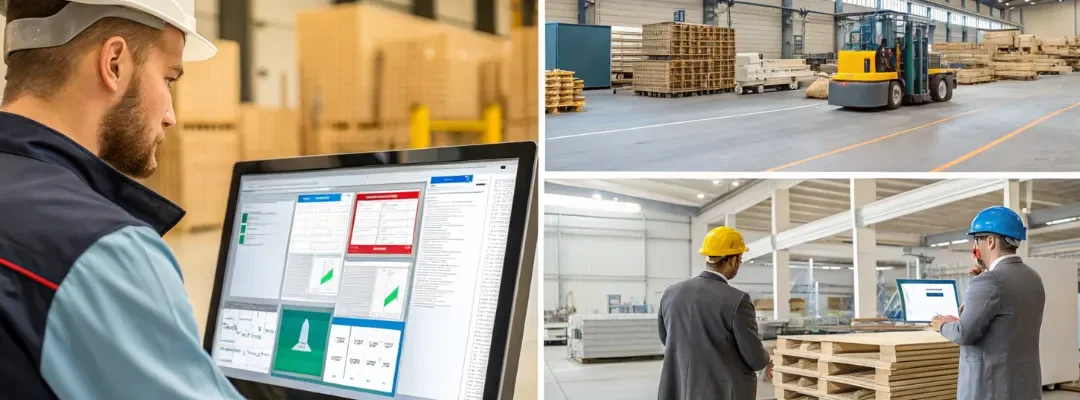
The construction material manufacturing industry forms the backbone of infrastructure and real-estate development. Manufacturers producing cement, steel, pipes, blocks, tiles, aggregates, RMC, and precast materials operate in a high-volume, margin-sensitive, and logistics-intensive environment.
To stay competitive, manufacturers must control:
Large-scale raw material procurement
High-volume, batch-based production
Consistent quality output
Inventory across yards, silos & depots
Dealer & distributor networks
Heavy vehicle dispatch & logistics
Weighbridge operations
Costing, compliance & GST
Manual systems struggle to handle this complexity, resulting in wastage, delays, quality variations, dispatch errors, and profit leakage. A specialized Construction Material Manufacturing ERP digitizes and synchronizes operations—from raw material intake to finished goods dispatch—ensuring control, consistency, and scalability.
Why Construction Material Manufacturers Need ERP
Common challenges faced by construction material plants include:
Variability in raw material quality
Inconsistent batch output
High material wastage
Poor visibility of production & stock
Dispatch bottlenecks at weighbridges
Dealer order & pricing confusion
Manual QC records
Difficulty managing multi-plant operations
An ERP system brings real-time visibility, automation, and process discipline across plants and supply chains.
Key Features of Construction Material Manufacturing ERP (2026 Edition)
The pharmaceutical and life sciences industry operates under the world’s most stringent regulatory environment. Every tablet, capsule, injection, syrup, biologic, or medical device must meet absolute accuracy, safety, and traceability standards.
Pharma manufacturers must ensure:
Exact formulation & dispensing
Controlled batch manufacturing
End-to-end traceability
Accurate batch records (BMR/BPR)
Strong QA & QC
Audit-ready documentation
Compliance with FDA, WHO-GMP, GAMP, CDSCO, EU-GMP
Yet many pharma plants still struggle with paper-based records, manual deviations, audit stress, and recall risks. A specialized Pharma & Life Sciences ERP digitizes, validates, and controls every step of the manufacturing lifecycle—from raw material receipt to batch release.
Why Pharma & Life Sciences Companies Need ERP
Common challenges faced by pharma manufacturers include:
Paper-based Batch Manufacturing Records
Manual documentation errors
No real-time batch traceability
Raw material mix-ups
QC delays holding batch release
Audit preparation stress
Validation & compliance gaps
Inefficient batch scheduling
Inaccurate batch costing
A Pharma ERP creates a controlled, compliant, and validated digital environment that meets global regulatory expectations.
Key Features of Pharma & Life Sciences ERP (2026 Edition)
1. Formulation & Recipe Management
ERP maintains complete control over:
API & excipient master data
Strength-wise formulation
Alternate ingredient mapping
Granulation, blending & coating parameters
Version control & approval workflow
Ensures formulation consistency and audit readiness.
2. Weighing & Dispensing Automation
ERP enforces:
Lot & batch selection rules
Barcode-based material verification
Electronic weighing scale integration
User-wise access control
Dispensing room logs & timestamps
Prevents mix-ups and dosing errors.
3. Digital Batch Manufacturing Records (BMR) & Batch Packaging Records (BPR)
ERP replaces paper BMR/BPR with validated digital records, including:
The hospitality industry is built on guest experience, speed, accuracy, and coordination across departments. A single delay in housekeeping updates, billing errors at the restaurant, or booking mismatches can negatively impact guest satisfaction and online reviews.
Hotels, resorts, and service apartments must seamlessly manage:
Room bookings (online & offline)
Front desk & reception
Housekeeping & maintenance
Restaurant & bar POS
Inventory & procurement
Events & banquets
Guest services & CRM
Staff scheduling
Billing, GST & accounting
Traditional or disconnected systems struggle to keep up with these demands. A modern Hospitality ERP / Hotel PMS (Property Management System) integrates every department into a single, real-time operational platform, improving efficiency and guest experience at every touchpoint.
Why Hotels & Hospitality Businesses Need ERP
Most hospitality businesses face daily operational challenges such as:
Overbooking or booking conflicts
Slow check-in / check-out
Poor coordination between front desk & housekeeping
Restaurant billing errors
Kitchen inventory wastage
No clear view of occupancy & revenue
Difficulty managing multiple outlets (restaurant, bar, spa, banquet)
Guest service delays
A Hotel ERP eliminates these issues through automation, visibility, and centralized control.
Logistics and transport businesses operate on tight margins, time-sensitive deliveries, fuel efficiency, and asset utilization. Even a small delay, fuel leak, or billing error can significantly impact profitability.
Yet many logistics operators still struggle with:
Poor trip planning & manual trip sheets
Uncontrolled fuel consumption & theft
No real-time fleet visibility
Delayed or missing POD (Proof of Delivery)
High breakdowns due to reactive maintenance
Inaccurate freight billing
Low driver accountability
Inefficient vehicle utilization
A modern Logistics ERP / Transport Management System (TMS) solves these challenges by integrating fleet, routes, trips, fuel, GPS, maintenance, billing, and accounting into one intelligent platform.
Why Logistics & Transport Companies Need ERP
Transport operations involve multiple moving parts that must work in perfect coordination:
Vehicles running idle or underutilized
Fuel misuse reducing margins
Manual billing causing disputes
No visibility on trip profitability
Frequent vehicle downtime
Poor driver performance tracking
Delayed customer payments
A Logistics ERP delivers real-time control, transparency, and cost optimization across operations.
Key Features of Logistics ERP (2026 Edition)
1. Fleet Management & Vehicle Master
ERP manages all vehicle assets:
Trucks, trailers, tankers
Containers & reefer vehicles
Pickups & last-mile delivery vans
Tracks critical details such as:
RC, insurance, permits & fitness expiry
Pollution & compliance certificates
Vehicle capacity & type
GPS device mapping
Ensures compliance and asset visibility.
2. Route & Trip Planning
ERP optimizes trips by calculating:
Best routes
Distance & expected transit time
Toll & permit costs
Vehicle load optimization
Driver allocation
Reduces fuel cost and improves on-time delivery.
3. Trip Sheet & Driver Log Management
Digital trip sheets capture:
Trip start & end time
Loading/unloading delays
Fuel issued & expenses
Route deviations
Halt & idle time
Eliminates paper trip sheets completely.
4. Fuel Management System
ERP tightly controls fuel usage:
Depot fuel issue
Fuel card integration
Mileage calculation (KM/L)
Consumption benchmarks
Theft & abnormal usage alerts
Improves fuel efficiency by 10–25%.
5. GPS Integration & Live Vehicle Tracking
Real-time visibility of:
Vehicle location
Speed & harsh driving
Route deviation
Unscheduled stops
Idle time
Improves customer transparency and driver discipline.
6. Freight & Billing Automation
ERP automates freight billing with:
LR / Consignment note generation
Customer-wise rate cards
Fuel surcharge calculation
Detention & waiting charges
Auto invoice creation
Faster, error-free billing with fewer disputes.
7. POD (Proof of Delivery) Mobile App
Drivers upload POD instantly:
Customer signature
Delivery photos
Time & location stamp
Remarks
Billing team is notified immediately.
8. Maintenance & Workshop Management
ERP manages vehicle health through:
Preventive maintenance schedules
Breakdown job cards
Spare parts inventory
Mechanic allocation
Maintenance cost tracking
Reduces downtime and extends vehicle life.
9. Driver Management & Payroll
ERP tracks driver details:
License & document expiry
Trip allowances
Advances & settlements
Incentives & penalties
Attendance & duty hours
Improves accountability and retention.
10. Analytics, Costing & MIS Reports
Powerful dashboards show:
Trip-wise profitability
Cost per km
Fleet utilization
Driver performance
Fuel efficiency
Route performance
Enables data-driven decisions.
End-to-End Logistics ERP Workflow
Transport Request / Order Received Pickup & delivery details captured.
The real estate industry involves long project lifecycles, high-value transactions, regulatory compliance, and constant coordination between sales, construction, finance, and customers.
Yet many developers and builders still struggle with:
Lead leakage & poor follow-ups
Manual booking & allotment errors
Delayed customer payments
Limited visibility into construction progress
Scattered documents & approvals
Vendor & contractor disputes
Poor coordination between sales, finance & site teams
Customer dissatisfaction during handover
A dedicated Real Estate ERP solves these problems by unifying CRM, project execution, finance, documentation, and customer engagement into one intelligent platform.
Why Real Estate Companies Need ERP
Developers and property managers face challenges such as:
Missed sales opportunities due to weak CRM
Complex milestone-based cash flow
Inaccurate unit availability data
Manual agreement & documentation handling
Delayed demand letters & collections
Poor contractor coordination
No single source of truth for management
A Real Estate ERP brings automation, transparency, and control across the entire project lifecycle.