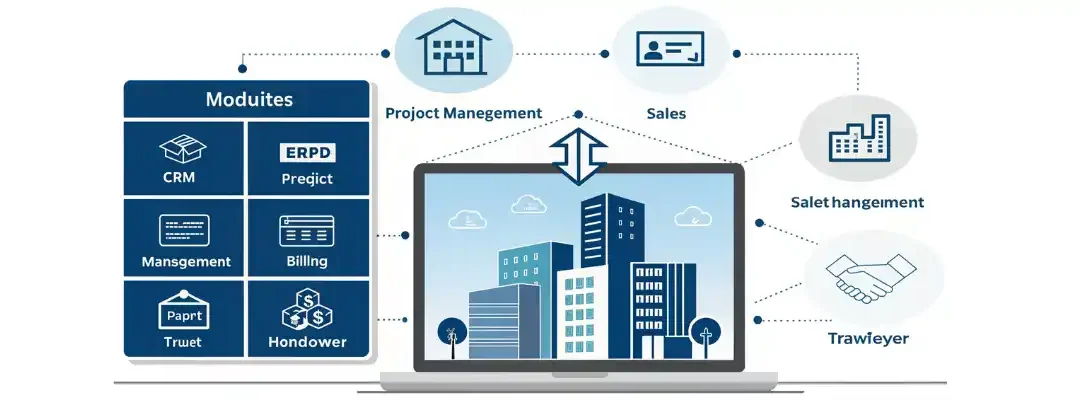
ERP for Real Estate & Property Developers: CRM, Project Management, Sales, Billing & Handover (2026 Guide)

ERP for Real Estate & Property Developers: CRM, Project Management, Sales, Billing & Handover (2026 Guide)

Real estate developers operate in long-cycle, capital-intensive, multi-stakeholder environments. From land acquisition and approvals to marketing, sales, construction tracking, billing, handover, and post-sales service — every stage must be synchronized.

Real estate companies must manage:

  • Land acquisition & approvals
  • Project planning & phase management
  • Marketing & lead generation
  • CRM & sales pipeline
  • Unit inventory (flats, plots, villas)
  • Booking & allocation
  • Construction progress tracking
  • Customer billing & collections
  • Legal documents & compliance
  • Handover & post-sales support

Without a centralized system, developers face lead leakage, inventory confusion, delayed payments, poor customer experience, and cash-flow mismatch. A dedicated Real Estate ERP connects CRM, sales, projects, construction progress, billing, finance, and customer service into one unified platform — ensuring higher conversions, faster collections, and smoother handovers.

Why Real Estate Developers Need ERP

Common challenges without ERP:

  • Weak CRM → lost leads & low conversion
  • No real-time visibility of unit availability
  • Delayed payment follow-ups
  • Poor coordination between sales & construction
  • Spreadsheet-driven errors
  • Slow agreement & document processing
  • Cash-flow imbalance
  • Poor customer communication
  • Delayed handover & snag resolution
  • Real Estate ERP provides control, transparency, automation, and trust across the entire customer lifecycle.

ERP for Real Estate Developers — Full 2026 Scope

Real Estate ERP integrates:

  • CRM & lead management
  • Project & phase planning
  • Unit inventory & pricing
  • Booking & allocation
  • Construction progress tracking
  • Payment schedules & reminders
  • Agreement & document management
  • Customer portal
  • Handover & warranty management
  • Accounting & GST

Ideal for:

  • Residential real estate developers
  • Commercial property developers
  • Plot layout developers
  • Villa & gated community projects
  • Townships & mixed-use developments
  • High-rise builders
  • Real estate marketing agencies

Key Features of Real Estate ERP (2026 Edition)

1. CRM, Lead Capture & Sales Pipeline

ERP captures leads from:

  • Website forms
  • Real estate portals
  • Social media campaigns
  • Walk-ins
  • Channel partners & brokers
  • Referrals

Features include:

  • Lead scoring
  • Automated follow-ups
  • Site visit scheduling
  • Negotiation tracking
  • Conversion analytics
  • Improves lead-to-booking conversion significantly.

2. Project & Phase Planning

ERP tracks:

  • Land acquisition details
  • Statutory approvals (RERA, DTCP, CMDA, BBMP, HMDA, etc.)
  • Project phases & towers
  • Construction timelines
  • Contractor assignments
  • Ensures planning transparency across departments.

3. Inventory Management (Flats, Plots, Villas)

ERP manages:

  • Unit-wise availability
  • Floor plans & specifications
  • Facing, size & dimensions
  • Pricing slabs & discounts
  • Hold, block & release logic
  • Prevents double-booking and inventory errors.

4. Booking, Allocation & Agreement Workflow

ERP automates:

  • Unit booking
  • Allotment letters
  • Sale & construction agreements
  • Customer KYC & document checklist
  • E-sign workflows
  • Stamp duty & registration details
  • Reduces booking-to-agreement cycle time.

5. Payment Schedules & Collection Automation

ERP enables:

  • Milestone-based payment plans
  • Automated SMS/Email/WhatsApp reminders
  • Online payment gateway integration
  • Demand letters
  • Receipt & ledger updates
  • Delayed payment interest calculation
  • Improves cash flow predictability.

6. Construction Progress Tracking

ERP tracks:

  • Phase-wise & milestone-wise progress
  • Contractor & labour updates
  • Material consumption
  • Site photos & reports
  • Completion percentages
  • Links construction progress directly with billing milestones.

7. Vendor, Labour & Contractor Billing

ERP manages:

  • Work orders
  • Vendor invoices
  • RA bills
  • Retentions & deductions
  • Approval workflows
  • Payment scheduling
  • Gives real-time project cost visibility.

8. Customer Portal (Buyer Portal)

Customers can view:

  • Booking details
  • Payment schedule & receipts
  • Construction progress updates
  • Agreements & documents
  • Handover status
  • Warranty details
  • Builds transparency and customer trust.

9. Handover, Snag List & Warranty Management

ERP tracks:

  • Final inspection
  • Snag/defect lists
  • Rectification status
  • Handover checklist
  • Warranty & AMC tracking
  • Post-sales service requests
  • Ensures smooth project closure and happy customers.

10. Financials, GST & Accounting

ERP handles:

  • Project-wise costing
  • Vendor & contractor payments
  • GST billing & returns
  • TDS
  • Cash-flow forecasting
  • Loan & mortgage coordination
  • Provides full financial control.

End-to-End Real Estate ERP Workflow

Lead Capture & CRM
Lead → Follow-ups → Site visit → Conversion

Booking & Agreement
Unit selection → Booking → Agreement

Payment Collection
Demand letter → Online payment → Receipt

Construction Monitoring
Milestone updates → CRM sync → Billing trigger

Handover Process
Snag list → Rectification → Keys handover

Post-Sales Support
Service tickets → Warranty tracking

Challenges vs ERP Solutions

Real Estate ChallengeERP Solution
Lead leakageCentralized CRM & automation
Payment delaysSmart reminders & online payments
Inventory confusionReal-time unit locking
Poor customer updatesBuyer portal
Cost overrunsBudget vs actual tracking
Slow agreementsDigital document workflow
Snag delaysAutomated handover module

Industries Using Real Estate ERP

  • Residential developers
  • Commercial developers
  • Plot & layout developers
  • Integrated townships
  • Real estate consultants & agencies

Benefits of Real Estate ERP

  • 35–60% improvement in lead conversion
  • Faster booking-to-agreement cycle
  • 100% accuracy in inventory & allocation
  • Timely payment collection
  • Improved customer satisfaction
  • Reduced manual paperwork
  • Clear visibility from CRM to handover

Why Choose 100xERP for Real Estate Developers?

100xERP is built specifically for real estate and property businesses, offering:

  • Advanced CRM & lead automation
  • Booking & agreement workflows
  • Payment schedules & reminders
  • Customer communication portal
  • Construction progress integration
  • Handover & post-sales tracking
  • Vendor & contractor billing
  • Project-wise costing & financials
  • Multi-project & multi-location support

FAQ — ERP for Real Estate & Developers

Q1. Can ERP prevent double-booking?
Yes. Real-time unit locking prevents duplicate bookings.

Q2. Does ERP support agreement generation?
Yes. Legal templates auto-populate from booking data.

Q3. Can customers make online payments?
Yes. Integrated payment gateway with auto-receipts.

Q4. Does ERP track construction progress?
Yes. Milestone-based progress tracking is included

ERP for Construction & Contractors: Project Planning, BOQ, Materials, Labour, Billing, Compliance & Site Execution (2026 Guide)

ERP for Construction & Contractors: Project Planning, BOQ, Materials, Labour, Billing, Compliance & Site Execution (2026 Guide)

Construction and contracting businesses operate in complex, multi-site, capital-intensive environments. Every project involves tight coordination between site teams, contractors, materials, machinery, finance, and compliance — often spread across remote locations.

Construction companies must manage:

  • BOQ (Bill of Quantities) & estimation
  • Tendering & project planning
  • Material procurement & site delivery
  • Labour & subcontractor management
  • Site execution & daily progress tracking
  • Machinery & equipment utilization
  • RA bills, subcontractor bills & client billing
  • Multi-site cost control
  • Quality, safety & statutory compliance

Without a centralized system, companies face cost overruns, delays, wastage, billing disputes, and weak project visibility. A robust Construction ERP connects site, office, materials, labour, machinery, and finance into one unified platform ensuring projects are delivered on time, within budget, and profitably.

Why Construction Companies Need ERP

Common challenges without ERP:

  • Cost overruns due to poor planning
  • Inaccurate BOQ tracking
  • Material wastage & pilferage
  • Labour productivity not measured
  • Delayed or incorrect RA bills
  • Weak subcontractor control
  • Manual DPRs with no real-time visibility
  • Compliance & documentation delays
  • No cost vs progress comparison

Construction ERP provides real-time control, accountability, and transparency across every project stage.

ERP for Construction & Contractors — Full 2026 Scope

Construction ERP integrates:

  • Project planning & scheduling
  • BOQ & estimation
  • Material & store management
  • Labour & subcontractor control
  • Site execution & DPR
  • Machinery & asset tracking
  • RA & client billing
  • Quality, safety & compliance
  • Financial accounting & costing

Ideal for:

  • Civil contractors
  • EPC contractors
  • Road & highway construction companies
  • Residential & commercial builders
  • Infrastructure contractors (bridges, flyovers, metros)
  • Interior & fit-out contractors
  • MEP contractors

Key Features of Construction ERP (2026 Edition)

1. Project Planning, BOQ & Estimation

ERP enables:

  • Itemized BOQ creation
  • Rate analysis (material, labour, machinery)
  • Tender & bid management
  • Work Breakdown Structure (WBS)
  • Budget vs actual comparison

2. Material Management & Procurement

ERP tracks:

  • Site material indents
  • Purchase requisitions & approvals
  • Vendor comparison & PO creation
  • GRN with quality checks
  • Site stock & consumption tracking
  • Theft & wastage monitoring

3. Labour, Attendance & Subcontractor Management

ERP manages:

  • Skilled & unskilled labour
  • Attendance (biometric / GPS-based)
  • Subcontractor work orders
  • Measurement sheets
  • Productivity & cost reports

4. Site Execution & Daily Progress Reports (DPR)

Features include:

  • Daily work progress entry
  • Material & labour usage
  • Concrete, steel & quantity tracking
  • Site photos with geolocation
  • Quality & safety checklists

5. Machinery, Equipment & Asset Tracking

ERP tracks:

  • Equipment allocation to sites
  • Working hours & idle time
  • Fuel consumption
  • Operator logs
  • Preventive maintenance & AMC

6. RA Bills, Subcontractor Bills & Client Billing

ERP automates:

  • Running Account (RA) bills
  • Measurement certification workflows
  • Subcontractor billing
  • Client invoice preparation
  • Retention, deductions & advances
  • GST-compliant billing
  • Eliminates disputes and payment delays.

7. Quality, Safety & Compliance Management

Includes:

  • Site inspection & checklist management
  • NDT & test reports
  • Safety audits & incident reporting
  • Labour law & statutory compliance
  • Contract documentation

8. Inventory, Stores & Site Warehousing

ERP manages:

  • Cement, steel, aggregates
  • Electrical, plumbing & MEP items
  • Inter-site material transfers
  • Returns & reconciliation
  • Minimum/maximum stock levels

9. Financial Accounting & Cost Control

ERP tracks:

  • Project-wise expenses
  • Profitability reports
  • Cash flow planning
  • Vendor & subcontractor payments
  • Bank reconciliation
  • GST compliance

10. Multi-Site & Multi-Project Management

ERP provides:

  • Centralized dashboards
  • Cost-to-completion analysis
  • Cross-site resource visibility
  • Management MIS reports

End-to-End Construction ERP Workflow

Estimation & BOQ
BOQ → Rate analysis → Tender submission

Project Planning
Budget → WBS → Timeline → Resource planning

Procurement & Material Delivery
Indent → Purchase → GRN → Site stock

Site Execution
Daily work → DPR → Consumption → Photos

Measurement & Billing
Measurements → RA bills → Client approval

Cost Monitoring & Closure
Actual vs budget → Variance → Profit analysis

Challenges vs ERP Solutions

Construction ChallengeERP Solution
Cost overrunsReal-time budget vs actual
Labour inefficiencyAttendance & productivity tracking
Material theftIssue & consumption logs
Billing disputesMeasurement-based RA bills
Approval delaysDigital workflows
Poor site visibilityLive dashboards & mobile DPR

Industries Using Construction ERP

  • EPC companies
  • Civil & infrastructure contractors
  • Road & highway builders
  • Commercial real estate developers
  • Residential builders
  • MEP & interior contractors

Benefits of Construction ERP

  • 10–20% reduction in project cost
  • 30–50% improvement in project visibility
  • Faster billing & payments
  • Reduced material wastage
  • Better labour & subcontractor control
  • Improved compliance readiness
  • On-time project execution
  • Higher profitability

Why Choose 100xERP for Construction & Contractors?

100xERP is built specifically for project-driven construction businesses, offering:

  • BOQ, tendering & estimation
  • Site execution & DPR
  • Labour & subcontractor management
  • Material & store control
  • Machinery & asset tracking
  • RA & client billing
  • Budgeting & cost control
  • GST-compliant accounting
  • Multi-project dashboards

FAQ — ERP for Construction & Contractors

Q1. Can ERP create BOQ automatically?
Yes. ERP supports detailed BOQ creation with rate analysis.

Q2. Does ERP track site progress daily?
Yes. DPRs include quantities, photos & location data.

Q3. Can ERP manage subcontractor billing?
Yes. Measurement-based subcontractor billing is fully automated.

Q4. Does ERP track machinery usage?
Yes. Fuel, hours, maintenance & breakdowns are tracked.

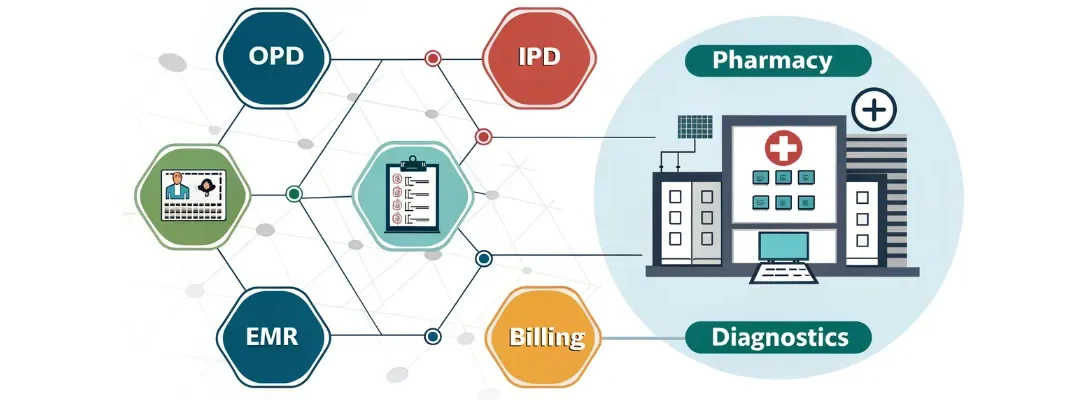
ERP for Hospitals & Healthcare: OPD, IPD, Pharmacy, EMR, Billing, Diagnostics & Patient Management (2026 Guide)

ERP for Hospitals & Healthcare: OPD, IPD, Pharmacy, EMR, Billing, Diagnostics & Patient Management (2026 Guide)

Hospitals and healthcare institutions operate in one of the most data-intensive, compliance-driven, and mission-critical environments. Every second, systems must support patient safety, clinical accuracy, operational efficiency, and financial transparency.

Healthcare organizations must manage:

When handled through manual registers or disconnected software, hospitals face delays, errors, revenue leakage, and patient dissatisfaction. A fully integrated Healthcare ERP + HMS (Hospital Management System) connects clinical, administrative, and financial operations into one intelligent digital platform.

Why Hospitals Need ERP + HMS

Common challenges without ERP:

  • Manual patient documentation errors
  • Long OPD waiting queues
  • Slow IPD discharge & billing
  • Medication & prescription errors
  • No centralized patient history
  • Pharmacy stock shortages & expiry loss
  • Delayed lab & radiology reports
  • OT scheduling conflicts
  • Insurance & TPA claim delays
  • Compliance and data security risks

A Healthcare ERP eliminates these issues through automation, integration, and real-time visibility.

ERP for Hospitals & Healthcare — Full 2026 Scope

Healthcare ERP integrates:

  • OPD & IPD management
  • EMR / EHR
  • Appointment scheduling
  • Pharmacy & drug management
  • Laboratory (LIS) & radiology (RIS)
  • Billing & financials
  • Insurance & TPA claims
  • Operation Theatre (OT)
  • Nursing & clinical workflows
  • Inventory & procurement
  • Patient portal & communication

Ideal for:

  • Multi-specialty hospitals
  • Clinics & polyclinics
  • Diagnostic centers
  • Nursing homes
  • Day-care hospitals
  • Specialty hospitals (cardiac, ortho, eye, dental)

Key Features of Healthcare ERP / HMS (2026 Edition)

1. Patient Registration, OPD & Appointment Scheduling

ERP manages:

  • Patient demographics
  • Doctor schedules
  • Token & queue management
  • Appointment reminders (SMS/WhatsApp)
  • Visit & consultation history
  • Faster OPD flow and reduced waiting time.

2. IPD (In-Patient) & Bed Management

Tracks:

  • Bed & room allocation
  • Nursing notes
  • Vital signs & charts
  • Medication schedules
  • Diet plans
  • Discharge summaries
  • Ensures smooth inpatient care coordination.

3. EMR / EHR — Electronic Medical Records

Centralized digital patient record includes:

  • Medical history & allergies
  • Prescriptions
  • Lab & radiology reports
  • Doctor notes
  • Surgical & treatment history
  • Improves clinical decision-making & continuity of care.

4. Pharmacy & Drug Management

ERP handles:

  • Batch & expiry tracking
  • Prescription-linked dispensing
  • Drug interaction alerts
  • Controlled drug registers
  • Purchase & stock control
  • GST-compliant pharmacy billing
  • Reduces medication errors and expiry losses.

5. Laboratory (LIS) & Radiology (RIS) Integration

Automates:

  • Test ordering from OPD/IPD
  • Sample collection & barcode tracking
  • Technician workflow
  • Result entry & verification
  • Auto-upload to EMR
  • Radiology scheduling (X-ray, CT, MRI, USG)
  • Faster diagnostics & reporting.

6. Billing, Insurance & TPA Claims

Supports:

  • OPD & IPD billing
  • Package billing
  • Consumable & procedure tracking
  • Cashless insurance workflow
  • Pre-authorization & claims
  • Outstanding & settlement tracking
  • Accurate revenue capture with fewer disputes.

7. Operation Theatre (OT) Management

Tracks:

  • OT scheduling
  • Surgery notes
  • Instrument & tray sets
  • Anaesthesia records
  • Pre-op & post-op protocols
  • Sterilization & CSSD logs
  • Improves surgical safety & utilization.

8. Nursing & Clinical Care Workflow

Includes:

  • Nursing rounds
  • Medication reminders
  • Digital treatment charts
  • Doctor instructions
  • Intake-Output (IO) charts
  • Patient vitals monitoring
  • Enhances patient safety and care quality.

9. Inventory, Assets & Procurement

ERP manages:

  • Medicines & consumables
  • Biomedical equipment
  • AMC & maintenance schedules
  • Vendor & purchase management
  • Auto reorder levels
  • Stock valuation
  • Eliminates stockouts & excess wastage.

10. Patient Portal & Communication

Patients can access:

  • Online appointments
  • Prescriptions
  • Lab & radiology reports
  • Bills & payments
  • Discharge summaries
  • Health records
  • Improves transparency & patient satisfaction.

End-to-End Hospital ERP Workflow

Patient Registration & Appointment
Walk-in / online → Token → Doctor consult

Consultation & EMR Entry
Doctor notes → Prescription → Diagnostic orders

Diagnostics
Sample → Testing → Report → EMR update

Pharmacy
Prescription → Billing → Dispensing

Admission (IPD)
Bed allocation → Nursing care → Treatment

OT / Procedure (if required)
Scheduling → Surgery → Documentation

Billing & Discharge
Final bill → Insurance → Discharge summary

Challenges vs ERP Solutions

Hospital ChallengeERP Solution
Long OPD queuesAppointment & queue automation
Medication errorsEMR + pharmacy integration
Billing disputesReal-time service capture
Lab delaysLIS & auto report upload
OT clashesCentralized OT scheduling
Medicine expiryBatch & expiry control
Compliance risksSecure EMR + audit trails

Healthcare Segments Using ERP

  • Hospitals
  • Clinics & polyclinics
  • Diagnostic & pathology labs
  • Nursing homes
  • Specialty care centers
  • Telemedicine platforms

Benefits of Healthcare ERP

  • 40–60% faster patient processing
  • Reduced clinical & medication errors
  • Faster billing & insurance settlement
  • Complete patient history access
  • Improved staff productivity
  • Reduced medicine wastage
  • Higher patient satisfaction
  • Strong compliance & audit readiness

Why Choose 100xERP for Hospitals & Healthcare?

100xERP delivers a unified HMS + ERP platform, offering:

  • OPD, IPD & EMR/EHR
  • Pharmacy, lab, radiology & OT modules
  • Insurance & TPA management
  • Inventory & procurement
  • Mobile apps for doctors, nurses & patients
  • Real-time dashboards
  • NABH-ready documentation
  • Multi-location hospital support
  • Built for growing hospitals, clinics & healthcare networks.

FAQ — ERP for Hospitals & Healthcare

Q1. Is EMR/EHR included?
Yes. A secure, role-based EMR/EHR system is built-in.

Q2. Can ERP manage insurance & TPA claims?
Yes. Includes cashless, pre-auth & claim tracking.

Q3. Is it suitable for multi-specialty hospitals?
Yes. Modular workflows support all specialties.

Q4. Is a patient portal available?
Yes. For appointments, reports, bills & payments.

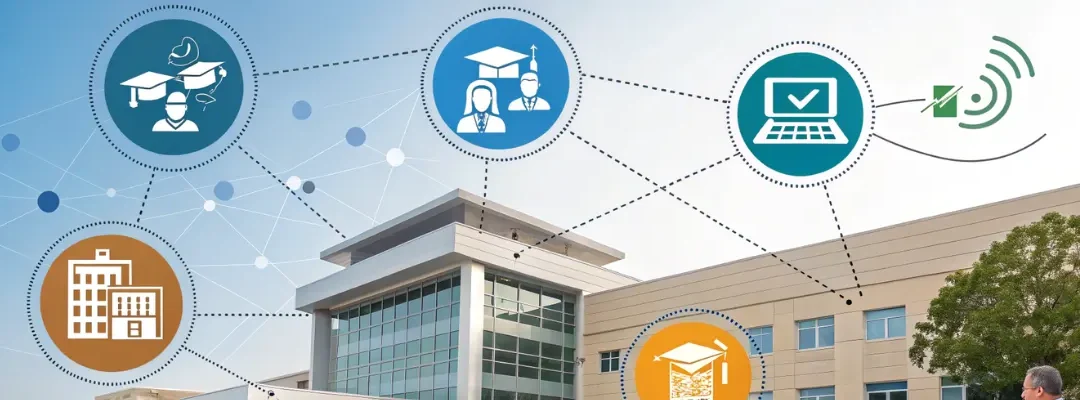
ERP for Education & School Management: Admissions, Fees, Attendance, Exams & Campus Operations (2026 Guide)

ERP for Education & School Management: Admissions, Fees, Attendance, Exams & Campus Operations (2026 Guide)

Educational institutions today operate in a highly dynamic academic and administrative environment. Schools, colleges, universities, and training institutes must manage thousands of daily activities involving students, teachers, parents, and regulators.

Key responsibilities include:

  • Admissions & enrollment
  • Fee collection & financial transparency
  • Attendance & timetable scheduling
  • Examination & evaluation
  • Academic performance tracking
  • Hostel & transport operations
  • Faculty HR & payroll
  • Parent communication
  • Compliance, accreditation & reporting

When these processes rely on manual systems or disconnected software, institutions face delays, errors, dissatisfaction, and operational overload. A modern Education ERP unifies academics, administration, finance, and communication into a single digital ecosystem, ensuring efficiency, transparency, and scalability.

Why Educational Institutions Need ERP

Common challenges faced without ERP:

  • Long queues for admissions & fee payments
  • Manual attendance errors
  • Difficulty managing online + offline classes
  • Delays in exam results & report cards
  • Poor parent-teacher communication
  • Fragmented student records
  • Heavy administrative paperwork
  • Lack of performance visibility
  • Compliance and audit stress

An Education ERP eliminates these issues through automation, centralized data, and real-time access.

ERP for Education & Academic Institutions — Full 2026 Scope

Education ERP integrates:

  • Admissions & enrollment
  • Online & offline fee management
  • Attendance & timetable automation
  • Exam & gradebook management
  • Student Information System (SIS)
  • Faculty HR & payroll
  • Transport & hostel management
  • Library automation
  • LMS & e-learning integration
  • Parent & student portals

Ideal for:

  • Schools (CBSE, ICSE, State Board)
  • Colleges & universities
  • Coaching & tuition centers
  • Vocational & skill institutes
  • Professional certification academies
  • Multi-campus education groups

Key Features of Education ERP (2026 Edition)

1. Admission, Enrollment & Student Onboarding

ERP manages:

  • Online & offline applications
  • Entrance exam workflows
  • Merit list & seat allocation
  • Document verification
  • Student ID generation
  • Faster admissions with complete transparency.

2. Fee Collection, Billing & Accounting

Supports:

  • Online payments (UPI, cards, net banking)
  • Installments & due reminders
  • Hostel & transport fees
  • Scholarships & concessions
  • Automatic receipts & ledger posting
  • Improves cash flow and reduces fee leakage.

3. Attendance, Timetable & Classroom Management

Tracks:

  • Student attendance (manual / RFID / biometric)
  • Faculty attendance
  • Lecture scheduling
  • Substitute allocation
  • Real-time attendance reports
  • Strengthens discipline and accountability.

4. Examination, Evaluation & Result Publishing

Features:

  • Exam timetable planning
  • Hall ticket generation
  • Online & offline exams
  • Digital evaluation
  • Grade / CGPA calculation
  • Report card generation
  • Faster, error-free result processing.

5. Student Information System (SIS)

Centralized student database with:

  • Personal & academic history
  • Attendance trends
  • Discipline records
  • Fee status
  • Certificates & documents
  • Eliminates data duplication and manual registers.

6. LMS — Learning Management System Integration

Supports:

  • Online classes (Zoom / Teams / Google Meet)
  • Study materials & notes
  • Assignments & quizzes
  • Progress tracking
  • Hybrid learning models
  • Ideal for blended & digital education.

7. Parent & Student Portal

Provides real-time access to:

  • Attendance
  • Timetable
  • Homework & assignments
  • Exam results
  • Notices & announcements
  • Fee payments
  • improves trust and engagement.

8. Staff Recruitment, HR & Payroll

ERP manages:

  • Faculty recruitment & onboarding
  • Attendance & leave management
  • Payroll & payslips
  • Performance appraisal
  • Training records
  • Streamlines academic workforce management.

9. Transport & Hostel Management

Transport module:

  • Bus routes & stops
  • GPS tracking
  • Driver logs
  • Student pickup/drop mapping

Hostel module:

  • Room allocation
  • Visitor logs
  • Mess billing
  • Attendance & discipline
  • Enhances safety and campus operations.

10. Library Automation

Tracks:

  • Book catalog & classification
  • Issue/return history
  • Fine management
  • Barcode/RFID integration
  • Fully digital library operations.

End-to-End Education ERP Workflow

Admissions & Enrollment
Application → Verification → Student creation

Academic Scheduling & Attendance
Timetable → Attendance → Reports

Teaching & Learning
Classroom → LMS → Assignments

Examinations & Evaluation
Exam setup → Evaluation → Results

Fees & Accounts
Online payments → Receipts → Accounting

Analytics & Reporting
Student performance → Attendance trends → Insights

Challenges vs ERP Solutions

Institutional ChallengeERP Solution
Fee delaysOnline payments + reminders
Poor communicationParent & student portal
Exam delaysDigital exams & auto grading
Attendance errorsRFID/biometric automation
Scattered dataCentralized SIS
Staff inefficiencyHR & payroll automation

Institutions Using Education ERP

  • Schools
  • Colleges
  • Universities
  • Coaching institutes
  • Skill development centers
  • Professional academies

Benefits of Education ERP

  • 50–70% faster administrative operations
  • Higher transparency for parents & students
  • Improved academic performance tracking
  • Reduced paperwork & manual effort
  • Efficient fee collection
  • Timely communication
  • Better data-driven decisions
  • Scalable for multi-campus institutions

Why Choose 100xERP for Education Management?

100xERP is built for modern education ecosystems, offering:

  • Complete student lifecycle management
  • Admissions, fees, attendance & exams
  • LMS & online class integration
  • Parent & student communication portal
  • Multi-campus & multi-branch support
  • HR, payroll & faculty management
  • Compliance-ready reporting
  • Suitable for schools, colleges, universities & training institutes of any size.

FAQ — ERP for Education & School Management

Q1. Can ERP support online classes?
Yes. LMS integration with popular platforms is included.

Q2. Does ERP automate exam results?
Yes. Digital evaluation & gradebooks are built-in.

Q3. Is a parent portal included?
Yes. Parents can access attendance, fees, results & notices.

Q4. Can ERP manage transport & hostel operations?
Yes. Dedicated modules are available.

ERP for Pharmaceutical Distribution: Batch, Expiry, Cold Chain, Compliance, Inventory & Billing (2026 Guide)

ERP for Pharmaceutical Distribution: Batch, Expiry, Cold Chain, Compliance, Inventory & Billing (2026 Guide)

Pharmaceutical distribution is one of the most tightly regulated and risk-sensitive supply chains in the world. Distributors, super stockists, and C&F agents handle thousands of SKUs daily, each governed by strict rules around:

  • Batch numbers
  • Expiry dates
  • MRP compliance
  • GST & HSN codes
  • Temperature-sensitive storage
  • Near-expiry risk
  • Returns & replacements
  • Regulatory audits

Even a single error—expired stock, wrong batch, cold-chain failure, or GST mismatch—can result in financial loss, regulatory penalties, or patient safety risks. A Pharmaceutical Distribution ERP automates and controls every stage of operations—from purchase to billing to compliance—ensuring accuracy, safety, and profitability.

Why Pharma Distributors Need ERP

Common operational problems in pharma distribution:

  • Manual batch & expiry tracking
  • Expired or near-expiry dead stock
  • wrong batch dispatched to retailers
  • Cold chain temperature violations
  • High return-to-vendor (RTV) volumes
  • Incorrect MRP, HSN or GST in invoices
  • Complex scheme & bonus miscalculations
  • Poor stock visibility across godowns
  • Delayed billing & collections
  • Audit pressure from drug authorities

A pharma-specific ERP eliminates these risks through rule-based automation and real-time controls.

ERP for Pharmaceutical Distribution — Full 2026 Scope

A Pharma Distribution ERP integrates:

  • Batch & expiry management
  • FEFO-based inventory control
  • Cold chain monitoring
  • Purchase, GRN & RTV
  • Wholesale billing & schemes
  • Warehouse & multi-location stock
  • Compliance & traceability
  • GST & HSN automation
  • Route delivery & logistics
  • Credit control & collections

Ideal for:

  • Pharmaceutical wholesalers
  • Stockists & super stockists
  • C&F (Carrying & Forwarding) agents
  • Hospital & institutional suppliers
  • Medical device distributors
  • Ayurvedic & herbal medicine distributors

Key Features of Pharma Distribution ERP (2026 Edition)

1. Batch, Expiry & MRP Management

ERP enforces:

  • Batch-wise inventory tracking
  • Expiry-first (FEFO) picking
  • Near-expiry alerts
  • Auto-blocking of expired stock
  • MRP validation during billing
  • Prevents expired or illegal stock dispatch.

2. Cold Chain Monitoring & Compliance

Supports:

  • Temperature & humidity logs
  • IoT sensor integration
  • Real-time alerts (SMS / app / email)
  • Cold room, freezer & reefer vehicle monitoring
  • Cold chain audit reports
  • Essential for vaccines, insulin, biologics & injectables.
3. Purchase, GRN & Supplier Returns (RTV)

ERP manages:

  • Purchase orders
  • GRN with batch & expiry capture
  • Shortage/damage adjustments
  • Supplier returns (RTV)
  • Debit note reconciliation
  • Eliminates inventory mismatches.

4. Sales, Billing & Distribution

Includes:

  • Wholesale billing
  • Customer-specific price lists
  • GST-compliant invoices
  • Batch-wise invoice printing
  • Route-wise dispatch planning
  • Faster billing with zero compliance errors.

5. Scheme, Bonus & Free Quantity Management

Supports:

  • Quantity-based schemes
  • Free goods schemes
  • Percentage discounts
  • Company-driven scheme updates
  • Scheme reconciliation reports
  • Protects distributor margins.

6. Warehouse & Multi-Location Inventory Control

Tracks:

  • Multiple godowns
  • Zone / rack / bin-wise stock
  • FEFO picking rules
  • Inter-warehouse transfers
  • ABC / FSN classification
  • Improves stock accuracy & picking speed.

7. Quality, Traceability & Regulatory Compliance

Stores and links:

  • Manufacturer batch details
  • COA (Certificate of Analysis)
  • Drug license records
  • Temperature logs
  • Batch movement history
  • Fully audit-ready at any time.

8. Retailer, Pharmacy & Hospital Integration (Optional)

Optional modules support:

  • Retail POS integration
  • Hospital pharmacy supply
  • Stock synchronization
  • Demand forecasting
  • Ideal for institutional supply chains.

9. CRM, Credit Control & Collections

ERP tracks:

  • Outstanding balances
  • Customer credit limits
  • Overdue alerts
  • Salesman-wise collections
  • Aging analysis
  • Improves cash flow discipline.

10. Reporting & Statutory Compliance

ERP generates:

  • GST returns & summaries
  • Batch traceability reports
  • Expiry & near-expiry stock lists
  • Scheme audit reports
  • Salesman performance reports
  • Reduces manual reporting burden.

End-to-End Pharma Distribution ERP Workflow

Purchase & GRN
Batch, expiry & QC captured at receipt

Warehouse Putaway
Bin allocation → Cold storage (if required)

Sales Order & Picking
Customer order → FEFO batch selection

Billing & Dispatch
Invoice → Route planning → Delivery

Returns (RTV / Customer)
Expired/damaged stock → Batch reversal

Collections & Scheme Settlement
Credit updates → Incentives → Reports

Challenges vs ERP Solutions

Industry ChallengeERP Solution
Expired stock lossFEFO + auto-blocking
Cold chain failureSensor alerts & logs
Wrong batch dispatchBatch-locked picking
High RTV volumeTraceable returns
Scheme miscalculationAutomated scheme engine
Audit pressureCompliance-ready reports

Industries Using Pharma Distribution ERP

  • Pharmaceutical wholesalers
  • C&F agents
  • Super stockists
  • Hospital supply chains
  • Medical device distributors
  • OTC & FMCG health distributors

Benefits of Pharma Distribution ERP

  • Zero expired stock dispatch
  • Accurate batch & expiry control
  • Strong cold chain compliance
  • Faster billing & dispatch
  • Lower inventory losses
  • Reduced returns & replacements
  • Better margin visibility
  • Audit-ready compliance
  • Improved cash flow

Why Choose 100xERP for Pharmaceutical Distribution?

100xERP is purpose-built for pharma trade, offering:

  • Batch & expiry automation
  • FEFO-driven warehouse logic
  • Cold chain monitoring
  • Wholesale & institutional billing
  • Scheme & bonus management
  • Multi-location stock control
  • GST & HSN compliance
  • Credit control & collections
  • Ideal for single-warehouse distributors to multi-state pharma networks.

FAQ — ERP for Pharmaceutical Distribution

Q1. Can ERP prevent expired medicines from being sold?
Yes. Expired batches are automatically blocked.

Q2. Does ERP support temperature monitoring?
Yes. IoT sensors and alerts are supported.

Q3. Can ERP manage company schemes and free quantities?
Yes. All pharma schemes are fully automated.

Q4. Does ERP handle returns and replacements?
Yes. Complete RTV & customer return workflows included.